
 English
 Wiadomości
Dom / Aktualności / Wiadomości branżowe / Fasteners for Tarps: Grommets, Snaps, and PVC Tarpaulin Cover Hardware Guide

Jednostka 2, 15#-405, społeczność Kuanglu, dystrykt Gulou, Nanjing, Chiny (biuro)

info@safelong.net

The short answer: for most tarps, a combination of brass or stainless steel grommets paired with bungee cords or twist-lock fasteners gives the best balance of holding strength, weather resistance, and ease of removal. Screws and lag hooks work for permanent installations, while snap fasteners and quick-release clips suit tarps that come down often. The right choice depends less on brand preference and more on wind exposure, how often the tarp is removed, and the tarp material itself, especially for a PVC Tarpaulin Cover, which behaves differently under tension than lighter canvas or poly sheeting.
A tarp fails almost as often at the attachment point as it does from fabric wear. Choosing fasteners for tarps is really a question of matching hardware to load, climate, and handling frequency, and getting that match wrong is the single most common cause of torn eyelets, flapping edges, and premature replacement.
Buyers often shop for fasteners the same way they shop for the tarp itself, focusing on price per unit rather than total cost of ownership. A cheap zinc snap that corrodes within a season and takes the fabric with it costs far more in replacement labor than a slightly more expensive stainless or brass fitting that lasts a decade. The hardware conversation should start with three questions: how often will the cover come off, what forces will it face while installed, and what is actually being protected underneath. A woodpile under a backyard tarp has very different requirements than a flatbed trailer running a PVC Tarpaulin Cover down the highway at speed, and the fastener choice for each should reflect that difference rather than defaulting to whatever hardware came in the tarp's original kit.
This guide walks through every major fastener category, how grommets and fastener types pair together, how climate and wind exposure change the calculation, a full cost comparison, step-by-step installation guidance, a maintenance schedule, and a detailed FAQ section covering the questions that come up most often when specifying hardware for a PVC Tarpaulin Cover or any other heavy-duty tarp system.
Almost every fastening method starts with a grommet, since the fastener itself rarely grips the fabric directly. A grommet reinforces the hole so that rope, hooks, or clips can pull against the material without tearing it. Brass grommets resist rust in wet climates, nickel-plated grommets offer a lower-cost alternative with moderate corrosion resistance, and stainless steel grommets hold up best under repeated coastal or industrial exposure.
Grommets are sized by number, typically from 00 up to size 6, with larger numbers indicating a bigger inner diameter. A grommet that is too small for the fastener it pairs with will bind under load, while an oversized grommet loosens its grip on the fabric edge over time. For a heavy PVC Tarpaulin Cover used on machinery or lumber stacks, a size 2 or 3 stainless grommet spaced every 18 to 24 inches is a common industry baseline, since PVC-coated fabric carries more weight per square foot than lightweight poly tarps.
Material choice affects more than corrosion resistance. It also determines how the grommet interacts with the fastener riding through it, since a rough or pitted surface accelerates wear on bungee cords, ropes, and hooks. A polished brass or stainless grommet extends the life of the cord or hook passing through it, not just the grommet itself, because a smooth bore reduces abrasion on every fastening cycle.
| Material | Corrosion Resistance | Relative Cost | Best Setting |
|---|---|---|---|
| Brass | Very high | Moderate | Coastal, humid, marine |
| Stainless steel | Very high | Higher | Industrial, heavy PVC covers |
| Nickel-plated steel | Moderate | Low | Dry inland climates |
| Aluminum | Moderate | Low | Lightweight tarps, low load |
| Plastic/ABS | High (no rust) | Lowest | Temporary or low-cost covers |
PVC-coated fabric is thicker than woven poly, which means the standard two-part grommet setting tool needs a firmer strike or a hydraulic press for consistent results in production settings. A grommet that is only partially seated on thick material looks fine on the day of installation but works loose within a few months of tension cycling, so checking that both halves are fully flush against the fabric on both sides during setting is worth the extra few seconds it takes.
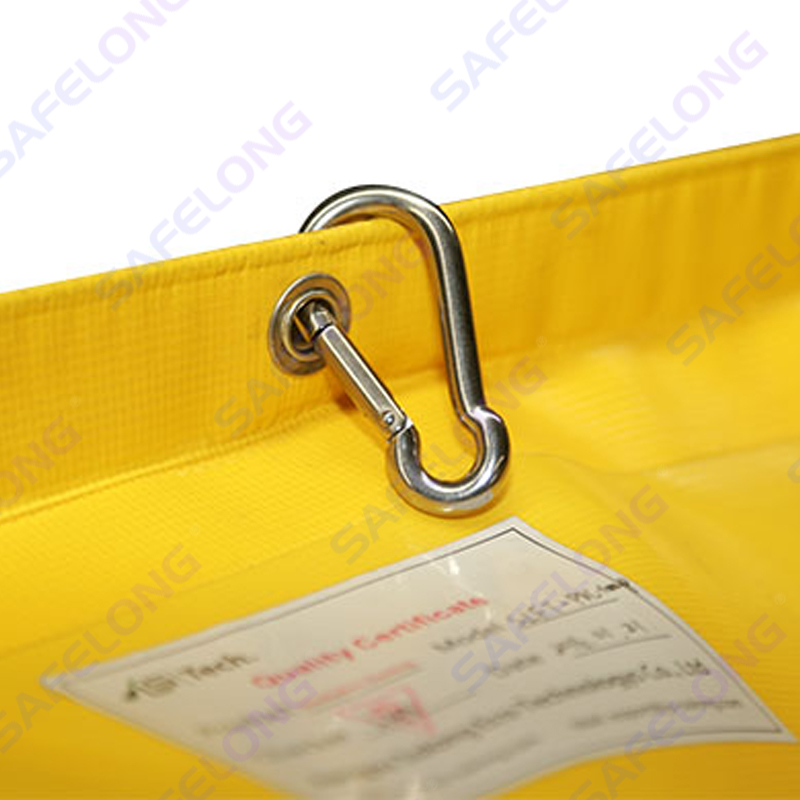
Once a grommet is in place, the fastener attaches the tarp to whatever it needs to hold onto, whether that is a truck bed, a fence post, or a scaffold frame. Four mechanisms dominate the market, and each suits a different removal frequency.
A ball-end bungee slips through the grommet and locks against the fabric using tension alone. This is the fastest method to install and remove, and it flexes slightly in wind gusts instead of transferring the full shock load to the grommet. The trade-off is that bungee cords stretch and degrade under UV exposure faster than metal hardware, typically needing replacement every one to two seasons outdoors.
Snap fasteners use a two-piece stud-and-socket design similar to jacket snaps, screwed or riveted into a fixed structure. They give a clean, low-profile finish and are common on boat covers and fitted PVC Tarpaulin Cover installations where appearance matters. Snaps can loosen in freeze-thaw cycles because the metal base and the snap button expand at slightly different rates in cold weather.
These require an oval-shaped grommet paired with a matching twist-lock base mounted to the structure. Once the fastener rotates into place, it resists pull-out far better than a standard snap, making it a preferred option for outdoor curtains, industrial enclosures, and any installation exposed to sustained wind loading.
These mechanical clip systems grip the tarp edge or grommet using a spring-loaded or lever action, requiring no screws or adhesive at all. They install and remove in seconds, which makes them popular for seasonal covers, but the visible clip housing is less discreet than a flush-mounted snap or twist-lock.
On very large tarps, particularly wide PVC Tarpaulin Cover panels used over stacked cargo or open trailers, rope threaded through a run of grommets and secured to cleats often outperforms individual clip fasteners because it distributes tension along the whole edge rather than concentrating it at isolated points. This method takes longer to tie down but is less prone to a single point of failure cascading into a flapping edge.
Where a tarp needs to flex slightly with a load underneath it, such as covering an irregularly stacked pallet or an open truck bed, adjustable webbing straps with cam buckles provide tension that can be fine-tuned without stretching a bungee cord to its limit repeatedly. These straps typically loop through the grommet or around a reinforced edge and ratchet down evenly, reducing the concentrated stress that a single hook point creates.
| Fastener Type | Best For | Typical Lifespan | Removal Speed |
|---|---|---|---|
| Bungee/ball cord | Seasonal covers, trailers | 1-2 years | Fast |
| Snap fastener | Boat covers, fitted PVC Tarpaulin Cover | 3-5 years | Fast |
| Twist-lock | High-wind, permanent structures | 5-8 years | Moderate |
| Common sense clip | Frequent seasonal setup | 3-4 years | Very fast |
| Lag screw/eye bolt | Permanent mounting | 8-10+ years | Slow |
| Rope and cleat | Oversized covers, cargo | 2-3 years (rope) | Slow |
| Cam buckle strap | Loads that shift or settle | 3-5 years | Moderate |
None of these systems are mutually exclusive, and most well-secured installations mix two methods, such as twist-lock fasteners along the primary edge with a supplementary rope run through corner grommets for redundancy during storm-level wind events.
A PVC Tarpaulin Cover is heavier, stiffer, and less forgiving under point-load stress than woven polyethylene tarps. The coating that gives PVC its waterproofing and rip resistance also makes the fabric less elastic, meaning grommets take the full force of any pull instead of the material stretching to absorb it. This has three practical consequences for fastener selection.
Manufacturers producing PVC Tarpaulin Cover products for industrial or transport use commonly rate their standard grommet spacing between 18 and 24 inches, tightening to 12 inches along corners and load-bearing edges.
PVC Tarpaulin Cover material is typically measured in grams per square meter or ounces per square yard, and heavier weights, often above 650 grams per square meter for industrial-grade covers, put proportionally more strain on every attachment point. A fastener rated for a light 400 gram tarp is not automatically suitable for an 800 gram industrial PVC cover, even if the grommet size looks identical, because the pull-out force at each point scales with the total fabric weight the fastener has to hold against wind lift.
Many PVC Tarpaulin Cover manufacturers heat-weld a reinforcement patch behind each grommet location rather than relying on the base fabric alone. This patch spreads load over a wider area before it reaches the grommet ring, and covers without this reinforcement tend to show stress tearing around the grommet years before the rest of the fabric shows any wear. When specifying a custom PVC Tarpaulin Cover for demanding use, asking whether grommet locations include a welded reinforcement patch is one of the more useful questions a buyer can ask a manufacturer.
Coastal, desert, and cold-climate environments each place different stress on tarp hardware, and picking fasteners without accounting for climate is one of the more expensive mistakes a buyer can make.
Salt air accelerates corrosion on anything but brass or marine-grade stainless steel. Zinc-plated grommets and mild steel snap bases will rust within a season near saltwater, staining the fabric and weakening the attachment point.
Twist-lock fasteners hold up best against sustained gusting, because their locking rotation resists the repeated pull-and-release cycle that gradually works snaps and bungees loose.
Plastic clips and common sense fasteners tolerate temperature swings better than metal snap fasteners, which can become brittle or mismatched in fit once the metal contracts in freezing conditions.
Intense sun exposure degrades rubber and elastic components faster than it affects metal hardware, so bungee cords and shock cord webbing in desert climates need more frequent replacement than the same components would require in a temperate region. UV-stabilized bungee cords, though slightly more expensive, hold their elasticity noticeably longer under constant sun than standard rubber cords.
Sticker price rarely reflects the real cost of a fastener system once replacement frequency is factored in. A rough per-point cost comparison over a five-year window makes the trade-offs clearer than upfront pricing alone.
| Fastener System | Unit Cost | Replacements in 5 Years | Approx. 5-Year Total |
|---|---|---|---|
| Zinc snap fastener | Low | 2-3 | Moderate |
| Brass snap fastener | Moderate | 0-1 | Low |
| Bungee/ball cord | Very low | 3-4 | Moderate |
| Twist-lock (stainless) | Higher | 0 | Low to moderate |
| Common sense clip | Low | 1-2 | Low |
| Cam buckle strap | Moderate | 1 | Low |
Twist-lock and brass hardware carry a higher purchase price but frequently work out cheaper over a five-year ownership window, since the labor cost of repeated replacement, particularly for grommets set into a PVC Tarpaulin Cover panel, typically exceeds the price difference in materials.
Adding or replacing fasteners on a tarp that did not come pre-fitted, or repairing a damaged attachment point, follows a consistent process regardless of which fastener type is going on afterward.
Fastener systems rarely fail without warning. A short seasonal check catches most problems while they are still a five-minute fix rather than a full re-install.
The right fastener also depends heavily on where the tarp is used and who is responsible for maintaining it, since industrial settings tolerate different trade-offs than a residential backyard application.
Flatbed trailers, construction sites, and freight covers favor twist-lock fasteners and heavy-duty snaps on a PVC Tarpaulin Cover, since these settings involve frequent handling by different crew members and need hardware that is intuitive and hard to misuse under time pressure.
Boat covers, awnings, and outdoor commercial curtains typically favor snap fasteners for their clean appearance, supplemented with zippers or common sense clips at high-traffic access points.
Backyard tarps, garden covers, and patio shelters generally do well with bungee cords and basic clip fasteners, since the lower cost and fast installation outweigh the modest reduction in wind resistance for occasional home use.
Most premature fastener failures trace back to a small number of avoidable choices rather than defective hardware.
Fitting a size 0 or 1 grommet on a large PVC Tarpaulin Cover meant for machinery storage puts far more load on the ring than it was designed to carry, and the fabric tears around the grommet long before the hardware itself gives out.
Pairing a stainless steel grommet with a zinc-plated hook accelerates corrosion at the contact point through galvanic reaction, which is easy to avoid simply by matching metal types across the fastening system.
Fasteners installed without accounting for prevailing wind direction take repeated lateral stress instead of straight pull-out force, which wears grommets unevenly and shortens their working life.
Replacing a single blown-out grommet without adding a reinforcement patch behind it usually leads to a repeat failure at the same spot within a season, since the surrounding fabric is often already stretched or weakened from the original tear.
Wider spacing between fasteners looks cleaner and uses less hardware, but on a heavy PVC Tarpaulin Cover, oversized spacing concentrates more wind load onto each remaining point, which is one of the most common root causes of a cover ripping loose during a storm rather than simply flapping at the edges.
Twist-lock fasteners paired with stainless steel oval grommets generally provide the strongest, most wind-resistant hold, followed closely by properly installed lag screws or eye bolts for permanent mounting.
Yes, repeated stretching at the same angle gradually widens the grommet hole. Rotating the anchor point slightly every few months reduces this wear.
Most manufacturers recommend 18 to 24 inches along flat edges, tightening to about 12 inches at corners and along load-bearing seams.
They function adequately in moderate cold but can become stiff or mismatched in extreme freeze-thaw cycles, since the metal snap base and button contract at different rates.
D-rings sewn into reinforced webbing distribute load across a wider stitched area and can outperform grommets on very heavy tarps, though they add manufacturing cost and are typically reserved for industrial or marine-grade covers.
Tear-out almost always results from a combination of undersized grommets, uneven spacing, or sustained lateral wind load rather than a single sudden event, which is why regular inspection catches the problem before full failure.
For permanent or semi-permanent installations facing regular wind exposure, yes, since the added holding strength and longer lifespan typically offset the more involved mounting process within the first year or two of use.
Spacing of 18 to 24 inches along flat edges is the common baseline, which for a typical 20 by 30 foot industrial cover works out to roughly 30 to 40 grommets, with additional reinforcement at each corner.
the count rises for covers used in consistently high-wind regions, where tighter spacing reduces the load carried by any single point.
Yes, and it is often a good practice. A common approach uses twist-lock or snap fasteners along the main structural edges for a firm primary hold, with bungee cords or rope at secondary points for flexibility and quick access.
A tarp with intact, well-maintained grommets and hardware retains significantly more resale and reuse value than one with torn eyelets or missing fasteners, since replacing damaged attachment points is often more labor-intensive than the fabric itself is worth.
Bungee ball cords remain the fastest option for a single or short-term use case, since they require no tools and take only seconds per attachment point, even though they are not the most durable choice for repeated long-term use.
Jeśli masz jakieś pytania, wypełnij formularz kontaktowy na dole strony i skontaktuj się z nami.
Akceptujesz warunki i politykę prywatności Sulong.

Park przemysłowy materiałów filtracyjnych nr 9, Funing, Chiny (fabryka)
Jednostka 2, 15#-405, społeczność Kuanglu, dystrykt Gulou, Nanjing, Chiny (biuro)

+86-15724842588

+86-515-68589588

+86-515-68589588

info@safelong.net
Prawa autorskie © Jiangsu Sulong Eco-Technologies Co., Ltd.

 Poprzedni